
Beach volleyball at the Summer Olympics
Olympic beach volleyball began as a demonstration in 1992.

Wikipedia / Wikimedia Commons
Beach volleyball first appeared at the Summer Olympics in 1992 as a demonstration sport, with Sinjin Smith and Randy Stoklos winning the men’s event and Karolyn Kirby and Nancy Reno taking the women’s. It became a full medal sport in 1996. The Olympic title is regarded as the top achievement in the sport, ahead of the World Championships and the FIVB World Tour.
Each Olympic tournament features 24 teams. Qualification is based on performance in FIVB events over roughly 18 months before the Games. No country may send more than two teams, and one spot each is reserved for the host nation and a randomly selected wild-card country. If a continent lacks representation, the highest-ranked team from that region earns a place.
**Men’s tournament** The men’s field has stayed at 24 teams since 1996. That first tournament was held at “Atlanta Beach” in Jonesboro, Georgia. The semifinal winners played for gold and silver; the losers competed for bronze. The gold-medal match pitted Americans Karch Kiraly and Kent Steffes against Mike Dodd and Mike Whitmarsh. Kiraly remains the only athlete to win Olympic medals in both indoor and beach volleyball, having taken indoor gold in 1984 and 1988.
In 2000, the event moved to Bondi Beach, Sydney. Another American duo, Blanton and Fonoimoana, beat Brazilians Zé Marco and Ricardo for gold. The 2004 Games in Athens saw Brazilians Emanuel and Ricardo—Ricardo having won silver in 2000—defeat Spain’s Bosma and Herrera. At the 2008 Beijing Games, reigning champions Emanuel and Ricardo lost in the semifinals to compatriots Márcio Araújo and Fábio Luiz, settling for bronze. The Brazilian victors then fell to Americans Rogers and Dalhausser in the final.
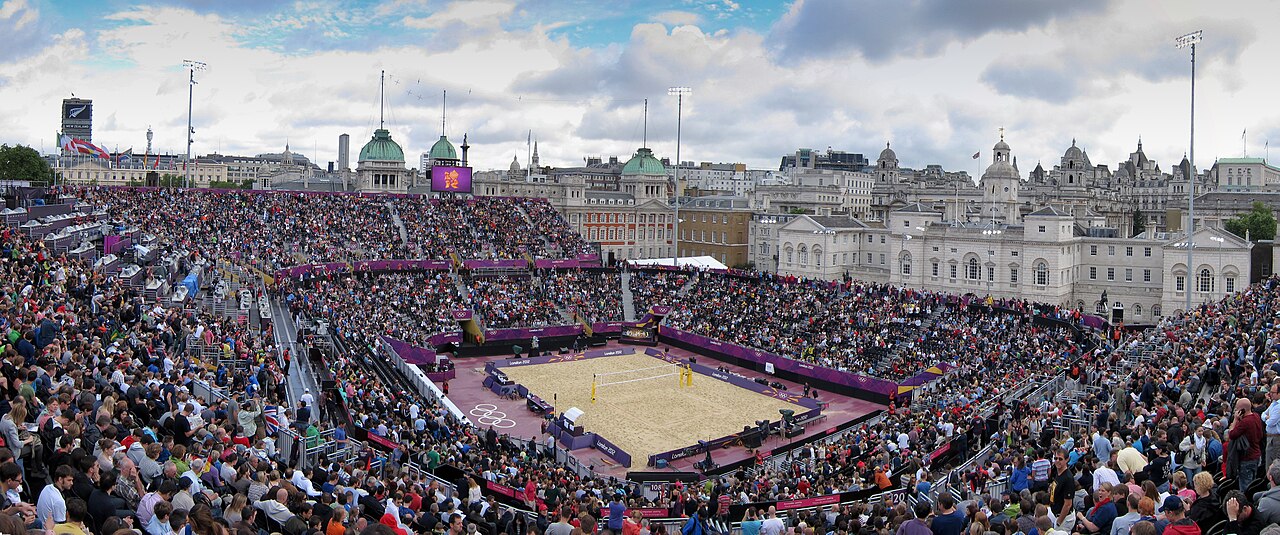
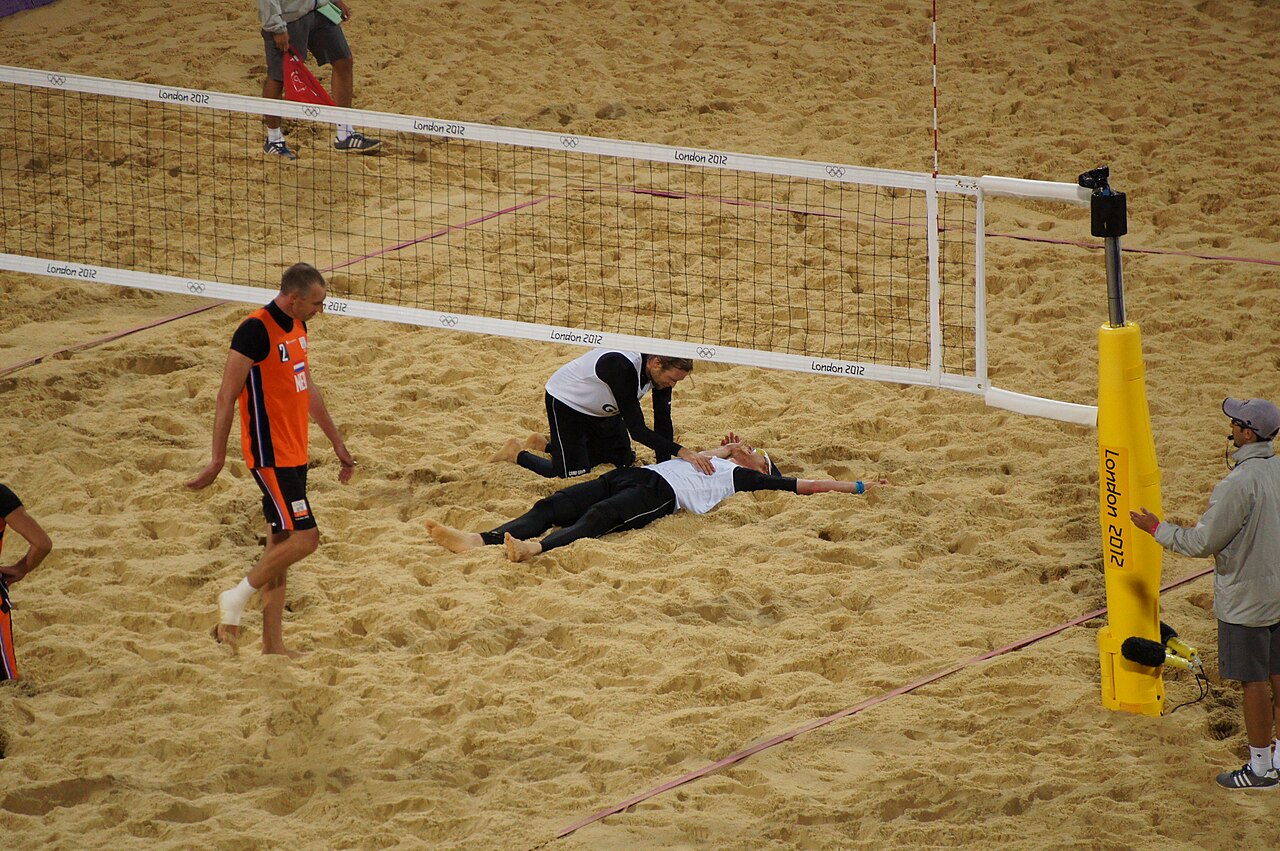
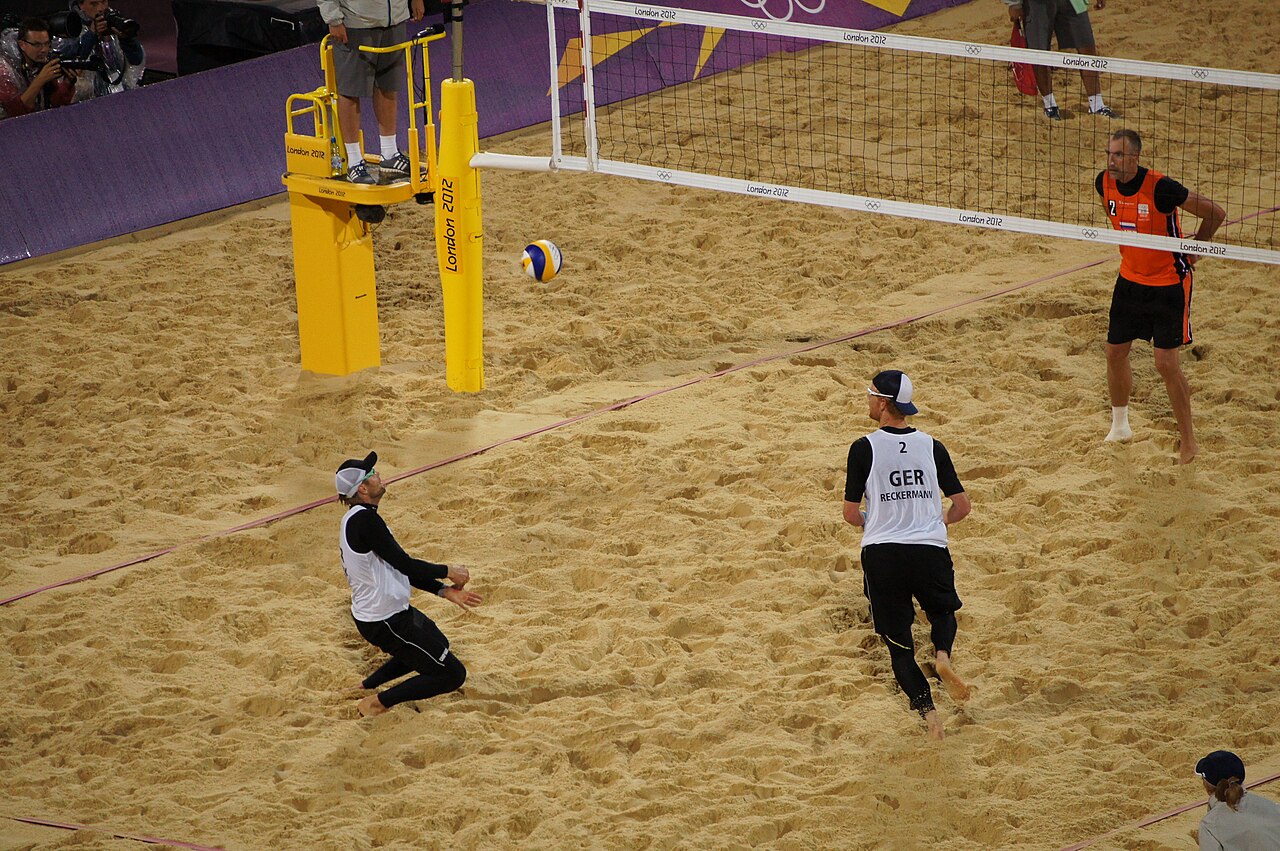
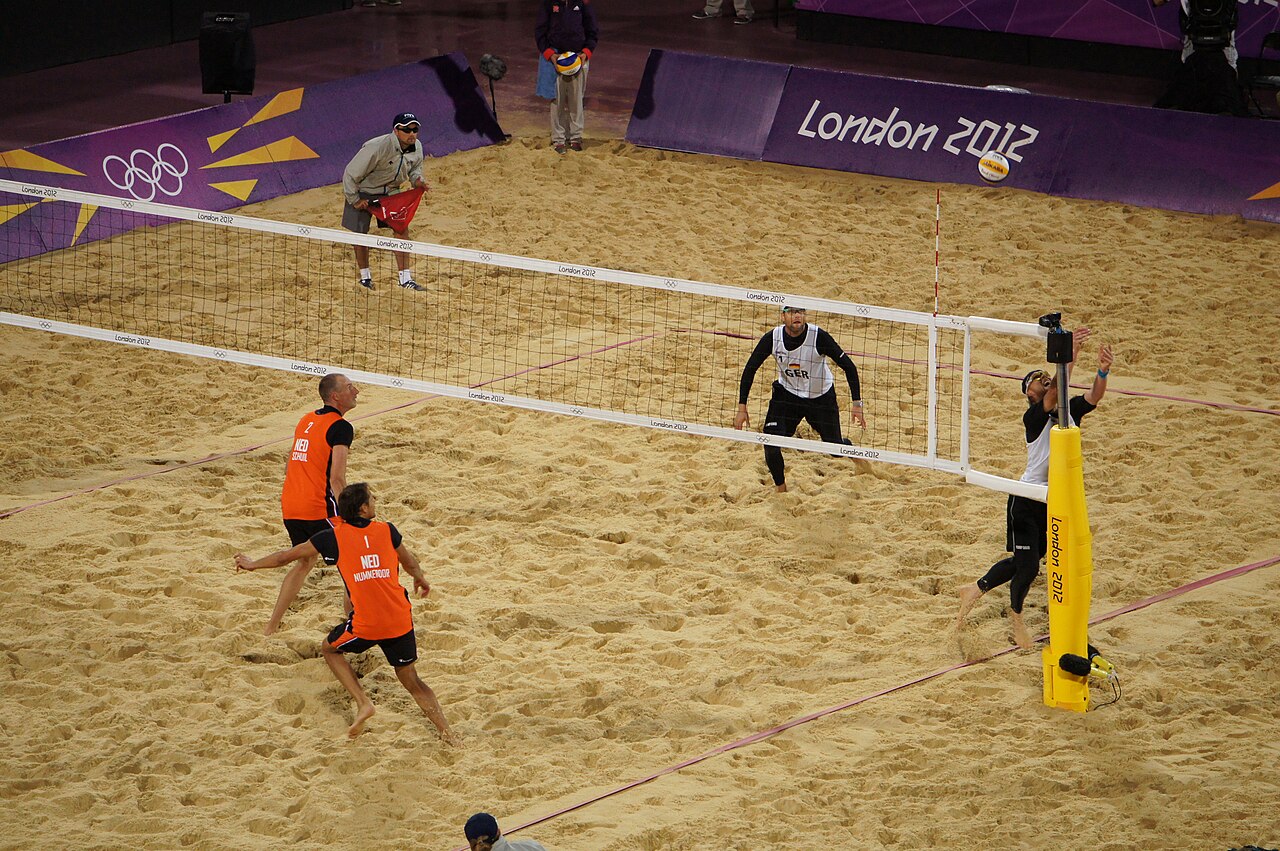
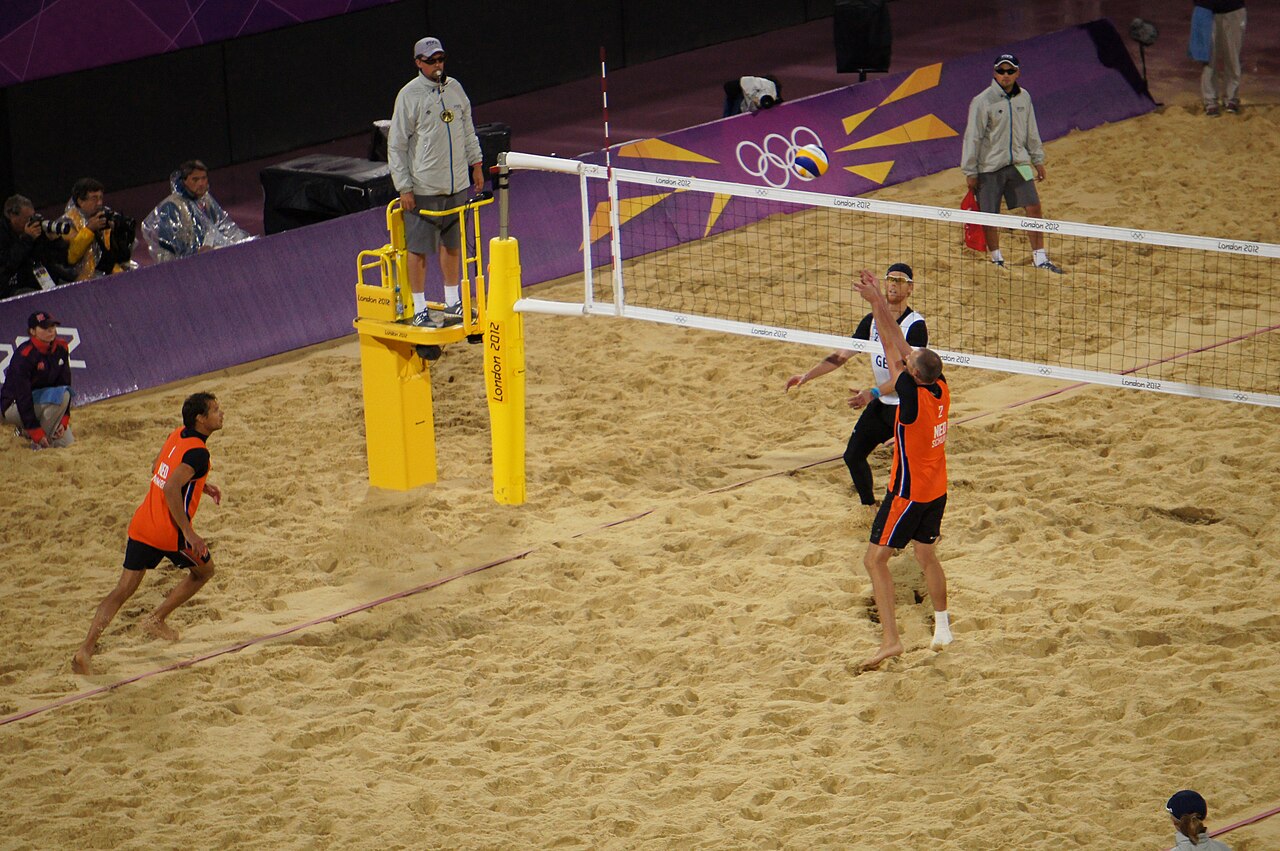
London 2012 was played at Horse Guards Parade. Emanuel Rego, now with Alison Cerutti, earned his third straight medal—completing the set of gold, silver, and bronze—after losing the final to Germans Brink and Reckermann. Latvia’s Pļaviņš and Šmēdiņš took bronze. For 2016, the tournament returned to a natural beach, Copacabana in Rio de Janeiro. Alison Cerutti, now partnered with Bruno Schmidt, won gold by defeating Italy’s Lupo and Nicolai. The Dutch pair Brouwer and Meeuwsen claimed bronze.
The 2020 Olympics (held in 2021 due to COVID-19) took place at Shiokaze Park. Norwegians Mol and Sørum won gold, beating Russians Krasilnikov and Stoyanovskiy. Qatar’s Cherif and Ahmed earned br
- First appearance
- 1992 (demonstration), 1996 (official)
- Number of teams
- 24 per tournament
- Qualification basis
- Performance in FIVB events over ~18 months before the Games
- Country limit
- Two teams per country
- Host and wild-card spots
- One each reserved for host and a randomly chosen wild-card country
Lore & Background
Beach volleyball was a demonstration sport at the 1992 Summer Olympics in Barcelona, where Sinjin Smith and Randy Stoklos won the men's tournament, and Karolyn Kirby and Nancy Reno won the women's. It became an official Olympic sport in 1996, with 24 teams competing. Teams qualify based on their performance in FIVB events over about 18 months before the Games, with a limit of two teams per country, one spot for the host, and one wild-card spot. If any Olympic region is not represented, the highest-ranked team from that continent qualifies.
Reader's Guide
The men's tournament has featured 24 teams in each edition since 1996. The first official tournament was played at 'Atlanta Beach' in Jonesboro, Georgia, where Karch Kiraly and Kent Steffes won gold. Kiraly remains the only person with Olympic medals in both indoor and beach volleyball. The women's tournament began in 1996 with 18 teams, expanding to 24 in 2000. Brazil and the United States have been the dominant nations, with Brazil winning the first women's gold in 1996 and the US dominating from 2004 to 2012. The 2020 Olympics saw Norway win men's gold and the US women's gold. The 2024 tournament marked the first time the US failed to win a medal in both men's and women's beach volleyball. The sport has seen rule changes, including allowing women to wear shorts or leggings and t-shirts starting in 2012, and permitting religious or cultural attire from 2016.
Did You Know?
- Karch Kiraly is the only person with Olympic medals in both indoor and beach volleyball.
- The 2012 Olympics allowed women to wear shorts or leggings and t-shirts instead of bikinis.
- Doaa Elghobashy became the first woman to wear a hijab in Olympic beach volleyball in 2016.
- The 2024 tournament was the first time the United States failed to win an Olympic medal in both men's and women's beach volleyball.
A Stage Beneath the Iron Lady
The 2024 Paris Olympic beach volleyball competition unfolded from 27 July through 11 August 2024, with every sand-court match staged at the Eiffel Tower Stadium in the Champ de Mars district. This venue choice placed the action in one of the most visually iconic settings in the sporting world, standing in deliberate contrast to the indoor volleyball events held at Paris Expo Porte de Versailles. The beach tournament field comprised 48 teams in total—24 pairs in the men's draw and 24 in the women's—making it a substantial two-week showcase of the sport. The proximity to the Eiffel Tower itself gave the competition a backdrop of Parisian architecture that few Olympic venues can match, turning each rally into a scene framed by the city's most famous landmark. The extended calendar, spanning nearly two full weeks, allowed the knockout bracket to progress at a measured pace, giving both athletes and spectators time to absorb the drama of each successive round.
Earning a Place on the Sand
The road to Paris 2024 for beach volleyball pairs followed a tripartite qualification structure designed to balance elite performance with global representation. France, as host nation, secured automatic entries in both the men's and women's categories. One additional spot per gender went directly to the champions of the 2023 FIVB World Championships, held in Tlaxcala, Mexico, in October of that year. Seventeen further pairs in each gender earned their berths through the FIVB Olympic ranking list, which tallied each pair's twelve best performances between 1 January 2023 and 10 June 2024. The final five spots per gender were allocated through continental qualification tournaments organized by CAVB, AVC, CEV, NORCECA, and CSV. A notable twist occurred in the European zone: the Netherlands originally claimed the CEV Continental Cup, but no Dutch athlete satisfied the requirements set by their national Olympic committee, forcing them to forfeit the quota. The Czech Republic, as runners-up, inherited the vacated place.
A First for Olympic Volleyball
The 2024 Games introduced a rule that had never previously appeared in Olympic volleyball competition: every participating team was permitted to register one additional non-competing athlete, designated as an AP, who could step in to replace a teammate for medical reasons. This provision expanded official team rosters from twelve to thirteen athletes, though only twelve were counted as part of the active squad for competition purposes. The change represented a meaningful shift in how Olympic organizers approached athlete welfare, acknowledging that the physical demands of a multi-week tournament could leave a player unable to continue without a designated replacement. For beach volleyball pairs, the addition of a third registered name offered a safety net that had not existed in prior Olympic cycles, potentially altering strategic decisions about load management and injury risk during the high-pressure knockout rounds.
Structure, Limits, and the Knockout Gauntlet
Each gender's beach volleyball bracket at Paris 2024 was capped at twenty-four teams, with a strict maximum of two pairs per National Olympic Committee. This two-team ceiling meant that even the strongest nations could not flood the field, preserving a degree of geographic diversity across the 48 total entries. The competition format moved directly into a knockout stage, where each match carried the full weight of elimination and there was no second chance to recover from a single loss. The final standings at the conclusion of the tournament reflected this high-stakes structure, with pairs progressing or falling based on head-to-head results in the bracket. The combination of the NOC limit, the 24-team cap, and the single-elimination knockout design created a tournament where preparation, peak timing, and mental resilience mattered as much as raw skill, since one poor day on the sand could end a pair's Olympic journey entirely.
Gallery

Frequently Asked Questions
When did beach volleyball first appear at the Summer Olympics?
Beach volleyball debuted as a demonstration event at the 1992 Barcelona Games and was elevated to a full medal sport starting with the 1996 Atlanta Olympics.
Who won the first Olympic beach volleyball titles in 1992?
Sinjin Smith and Randy Stoklos claimed the men's demonstration gold, while Karolyn Kirby and Nancy Reno took the women's title at the 1992 Games.
How many teams compete in Olympic beach volleyball?
Each Olympic tournament fields exactly 24 teams, split between the men's and women's brackets.
How do teams qualify for Olympic beach volleyball?
Spots are earned through results in FIVB-sanctioned events across roughly an 18-month window leading up to the Games, with one guaranteed slot for the host nation and another for a randomly selected wild-card country. No nation is allowed to enter more than two teams.
Why is the Olympic beach volleyball title considered the sport's highest honor?
Fans and players alike rank the Olympic gold above the FIVB World Championships and World Tour titles, treating the Games as the ultimate competitive peak in beach volleyball.
More in Beach volleyball at the Summer Olympics 1-19
Spotted an error? Know more?
This is a living reference — every entry is fact-audited, and reader corrections feed straight into our audit queue. Suggest an edit · See this site's audit record