
Beach volleyball at the 2012 Summer Olympics – Women's tournament
American pairs won gold and silver at London 2012.

Wikipedia / Wikimedia Commons
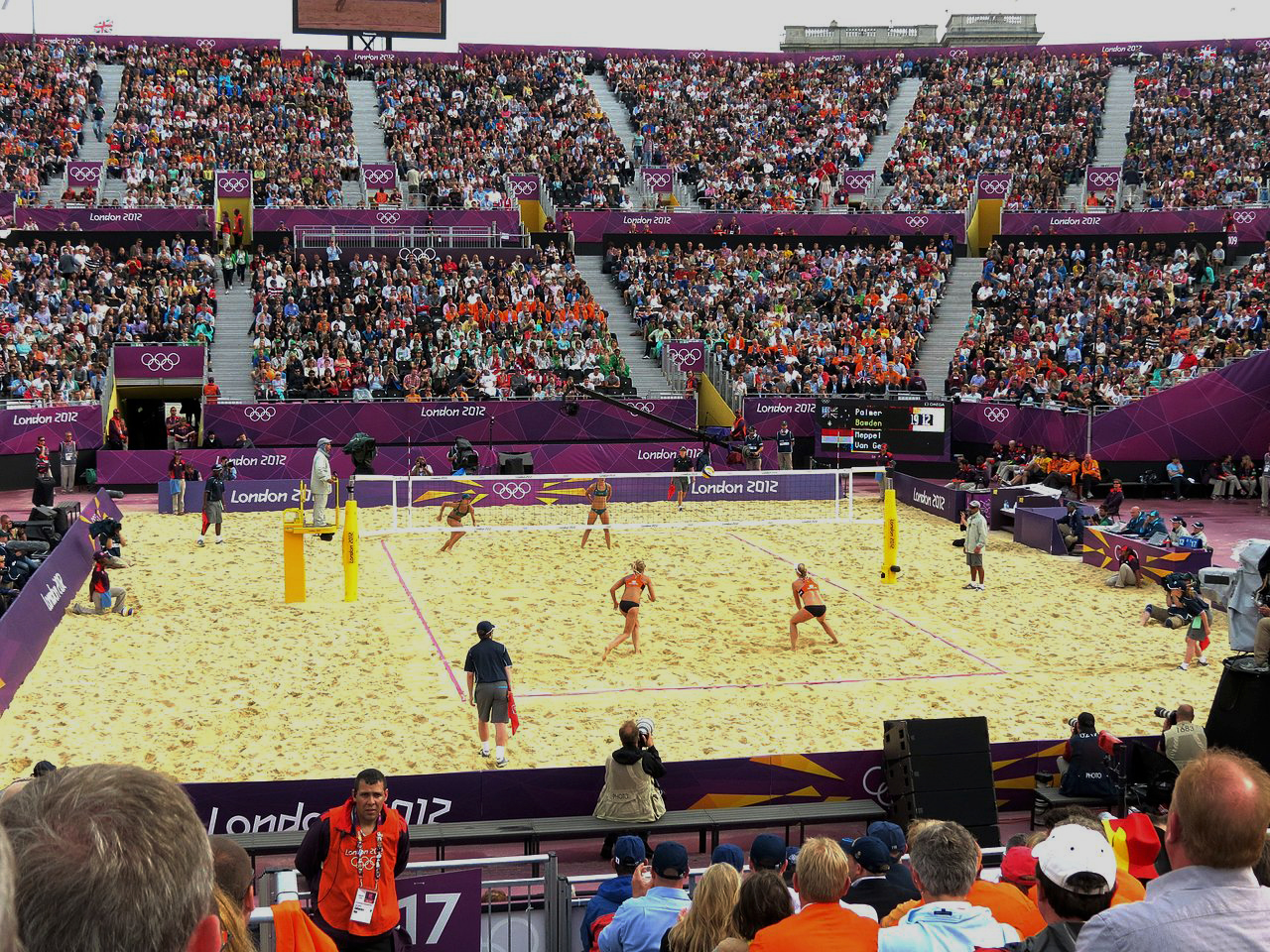
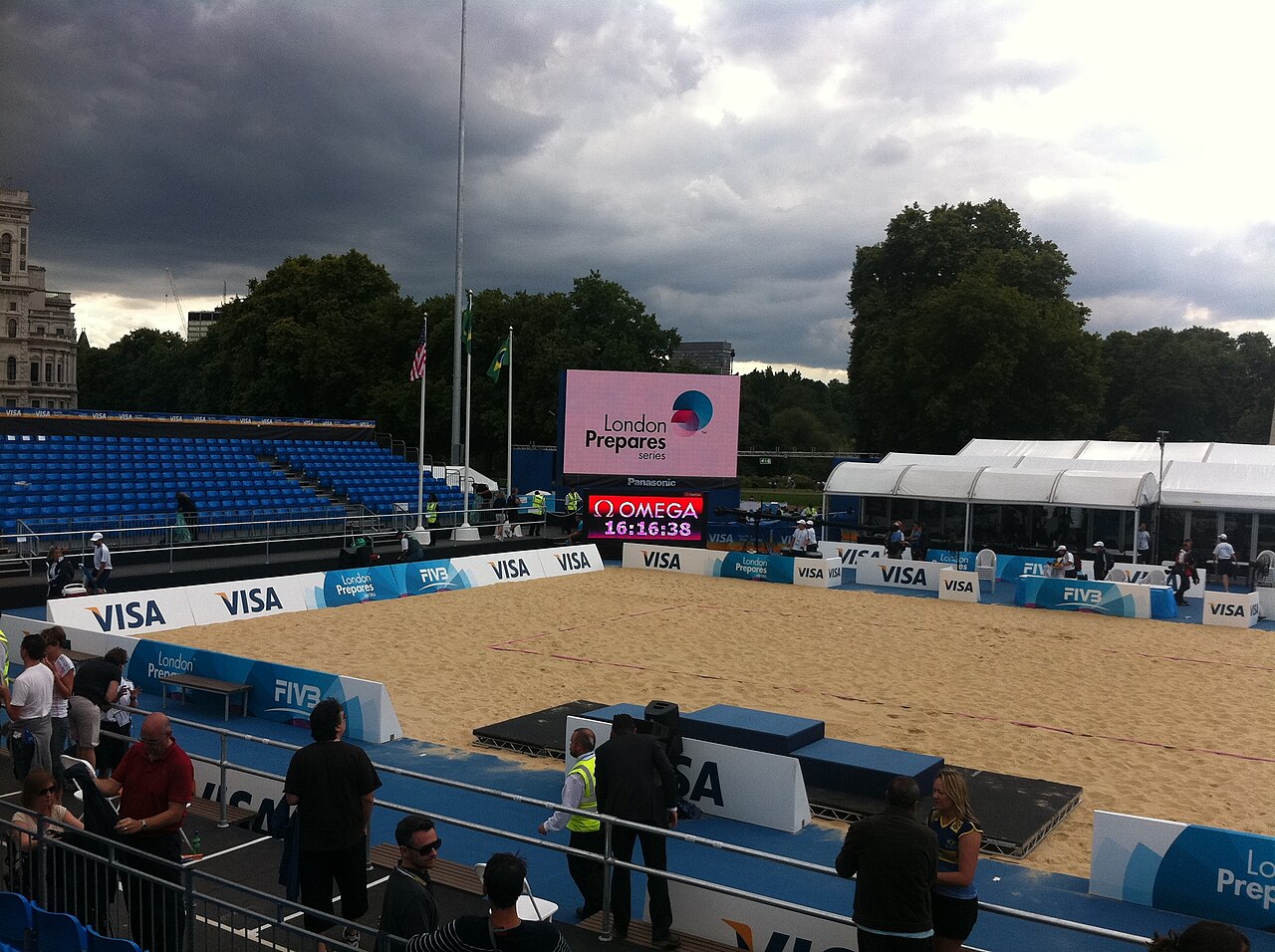
The women's beach volleyball competition at the 2012 London Olympics ran from July 28 to August 8 at Horse Guards Parade. A total of 24 pairs competed, with Great Britain fielding one team as the host nation and no other country allowed more than two. Sixteen teams secured their spots via the FIVB World Rankings as of June 17, 2012; five more qualified through the 2010–12 Continental Cup; and the final three came from the FIVB World Cup Olympic Qualification tournament. For only the second time in Olympic history, both gold and silver went to teams from the same country—the United States—matching Brazil’s feat when the event debuted in 1996.
- Event
- Women's beach volleyball at the 2012 Summer Olympics
- Location
- Horse Guards Parade, London, United Kingdom
- Dates
- July 28, 2012 – August 8, 2012
- Number of teams
- 24 pairs
- Qualification method
- FIVB World Rankings, Continental Cup, World Cup Olympic Qualification
- Gold and silver
- Both won by American pairings
- Historical note
- Second time top two teams from same country (first: Brazil 1996)
Lore & Background
The two best teams from each of six pools advanced to the round of 16, along with the two best third-placed teams. Two additional third-placed teams qualified via 'lucky loser' matches. The bracket proceeded through round of 16, quarterfinals, semifinals, bronze medal match, and final. All times were British Summer Time (UTC+01:00).
Reader's Guide
The 2012 women's beach volleyball tournament is significant for being the second Olympic edition where the gold and silver medals were won by pairs from the same nation—the United States—following Brazil's sweep in 1996 when the sport debuted. This achievement underscored the dominance of American beach volleyball on the global stage during that era. The tournament also highlighted the qualification system, which combined world rankings, continental cups, and a world cup qualifier to select the twenty-four pairs. The use of 'lucky loser' matches to fill the final two spots in the knockout stage added a dramatic element to the pool play. The event was held at Horse Guards Parade, a historic venue in central London, and drew attention as part of the broader 2012 Olympic beach volleyball program. The legacy of this tournament includes reinforcing the United States' reputation in the sport and providing a benchmark for future Olympic competitions.
Did You Know?
- The tournament took place at Horse Guards Parade in London from July 28 to August 8, 2012.
- Twenty-four pairs competed, with a maximum of two per nation and one host entry from Great Britain.
- Sixteen teams qualified via the FIVB World Rankings, five via the Continental Cup, and three via the World Cup Olympic Qualification tournament.
- The two American pairings won gold and silver, the second time in Olympic history the top two women's teams were from the same country.
Tournament Architecture & Olympic Context
The 2012 London Olympic women's volleyball competition marked the thirteenth time this event had featured at the Summer Games. Under the joint stewardship of the FIVB and the International Olympic Committee, the tournament took place at the Earls Court Exhibition Centre over a two-week span from 28 July through 11 August 2012. Twelve nations earned their way into the competition, which was split into two groups of six teams each. Seeding followed the Serpentine system, with positions determined by rankings as of 15 January 2012. After a full round-robin phase within each pool, the four highest-placed teams from every group progressed to a single-elimination knockout stage where the gold, silver, and bronze medals were ultimately decided. All match times were recorded in British Summer Time, reflecting the tournament's London setting.
Qualification Pathways & Continental Balance
The road to London 2012 for women's volleyball featured a distinctive qualification structure that merged continental and global competition. The Asian Qualification Tournament was not held separately but was instead combined with the World Qualification Tournament, creating a unified pathway for teams from the continent. Under this arrangement, the first three-place teams to emerge from the combined event claimed their Olympic berths as the winners of the World Qualification Tournament. Meanwhile, the best-performing Asian team that did not finish in the top three secured the dedicated Asian Qualification Tournament slot. This dual-identity format ensured that Asian representation was guaranteed while still allowing the strongest teams overall to qualify on merit. The system reflected the FIVB's effort to balance universal competitiveness with continental equity in Olympic seeding.
Scoring Mechanics & Tiebreaker Hierarchy
The pool stage employed a graduated points system that rewarded dominant victories more heavily than close ones. A team sweeping a match 3–0 or winning 3–1 collected three points, while a hard-fought 3–2 triumph earned two. Even a loss could yield a point if the defeated side managed to take three sets in a 3–2 contest; a straight-set defeat, by contrast, produced nothing. When pool play concluded with teams level on points, a tiered set of tiebreakers resolved the deadlock: first, the greater number of wins; second, the set win ratio; third, the points ratio; and finally, head-to-head results. A particularly important rule governed situations where three or more teams were tied—in those cases, the tiebreaker criteria were applied exclusively to the matches played among the tied sides, rather than to the full pool schedule. This ensured that the decisive factor was direct competition between the affected teams.
Individual Honors & Statistical Recognition
Beyond the team medals, the 2012 women's volleyball tournament provided a platform for individual distinction. The tournament's Most Valuable Player award was claimed by South Korea's Kim Yeon-koung, a recognition that highlighted her standout contributions throughout the competition. Individual statistical leadership was also tracked, though with an important caveat: only players whose teams had advanced to the quarterfinals were eligible for the statistical leader rankings. This restriction meant that the statistical tables reflected the performances of the tournament's upper echelon rather than every participant who had competed during pool play. The final standings and medalist table rounded out the official record, documenting which nations claimed gold, silver, and bronze. Together, these individual and collective records formed the complete narrative of what was the thirteenth Olympic edition of the women's volleyball event, a competition that balanced team glory with personal achievement under the FIVB's governance.
Gallery




Frequently Asked Questions
Who won the women's beach volleyball gold medal at the 2012 London Olympics?
Both the gold and silver medals were claimed by American pairings, making it just the second time in Olympic beach volleyball history that a single country swept the top two spots.
Where and when did the women's beach volleyball tournament take place at the 2012 Olympics?
The event was staged on the sand courts at Horse Guards Parade in central London, running from July 28 through August 8, 2012.
How many teams competed in the 2012 women's Olympic beach volleyball?
Twenty-four pairs entered the competition, with Great Britain allowed one team as the host nation and every other country capped at two entries.
How did pairs qualify for the 2012 women's Olympic beach volleyball?
Sixteen teams earned their berths through the FIVB World Rankings snapshot of June 17, 2012, five came through the 2010–12 Continental Cup, and the remaining three slots were filled at the FIVB World Cup Olympic Qualification tournament.
Why is the 2012 women's Olympic beach volleyball result considered a historic moment?
The fact that both gold and silver went to the United States made it only the second instance in the sport's Olympic history where one nation dominated the podium with both top finishes.
More in Beach volleyball at the Summer Olympics 1-19
Spotted an error? Know more?
This is a living reference — every entry is fact-audited, and reader corrections feed straight into our audit queue. Suggest an edit · See this site's audit record