
Beach volleyball at the 2016 Summer Olympics – Men's tournament
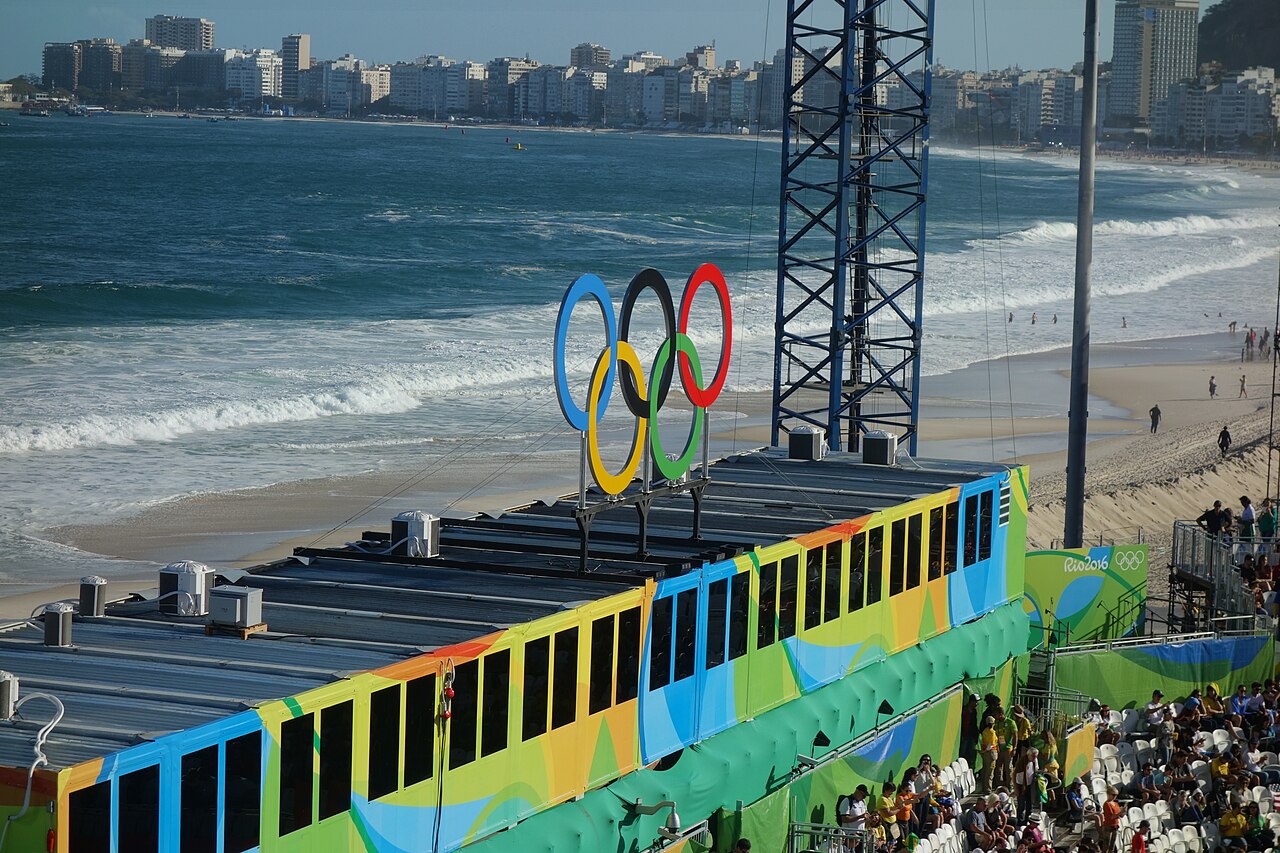
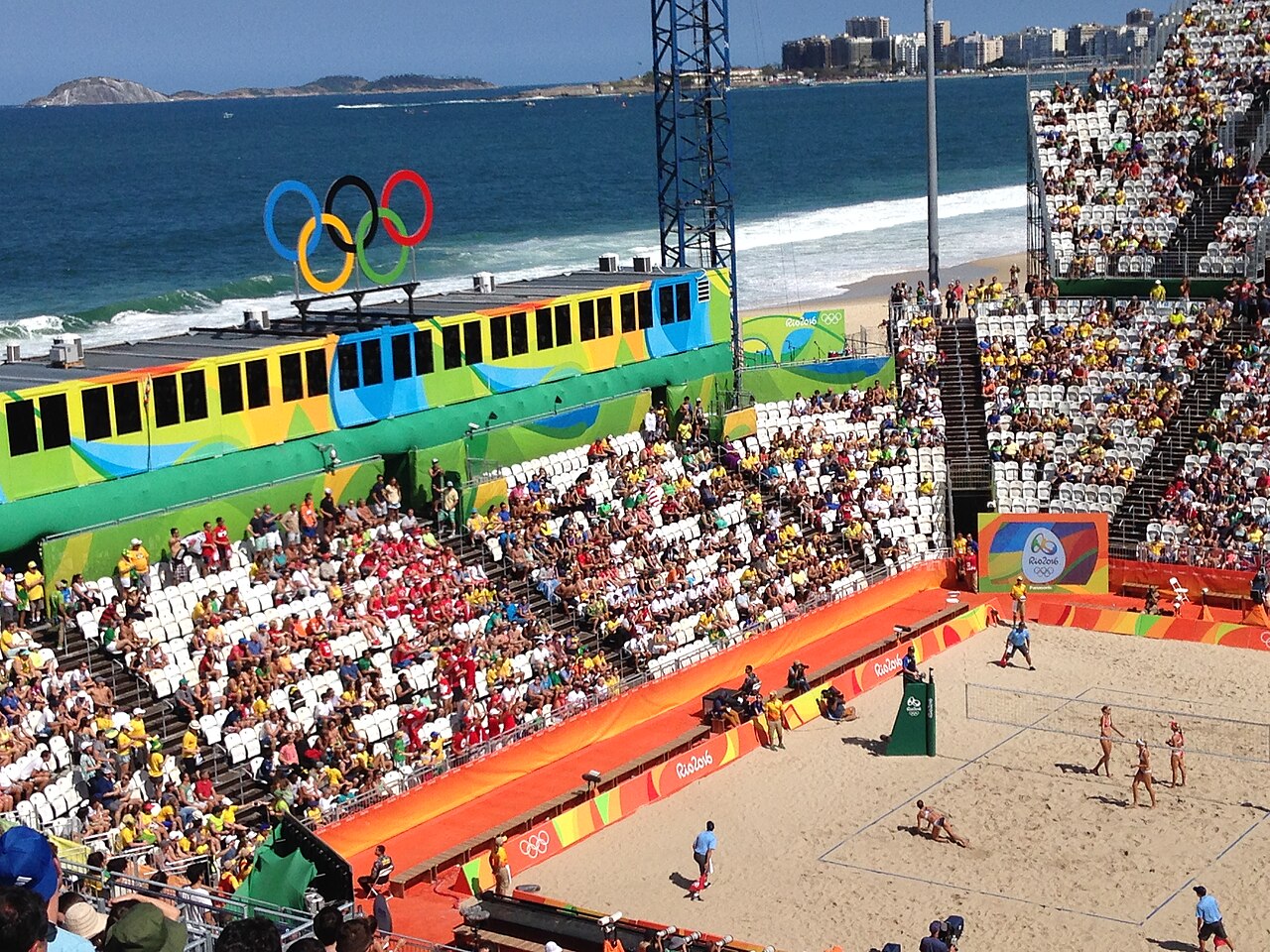
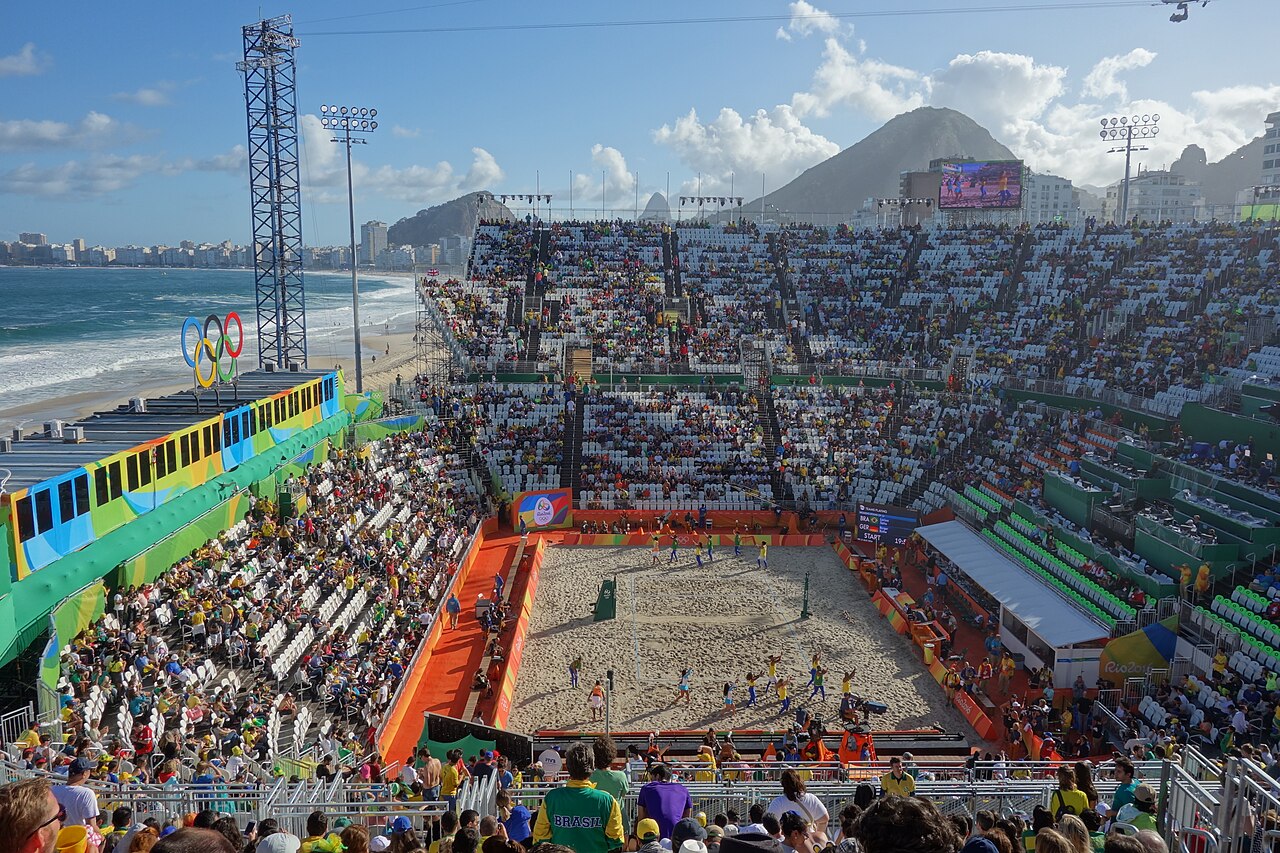
Twenty-four teams competed for gold at Copacabana Stadium.

Wikipedia / Wikimedia Commons
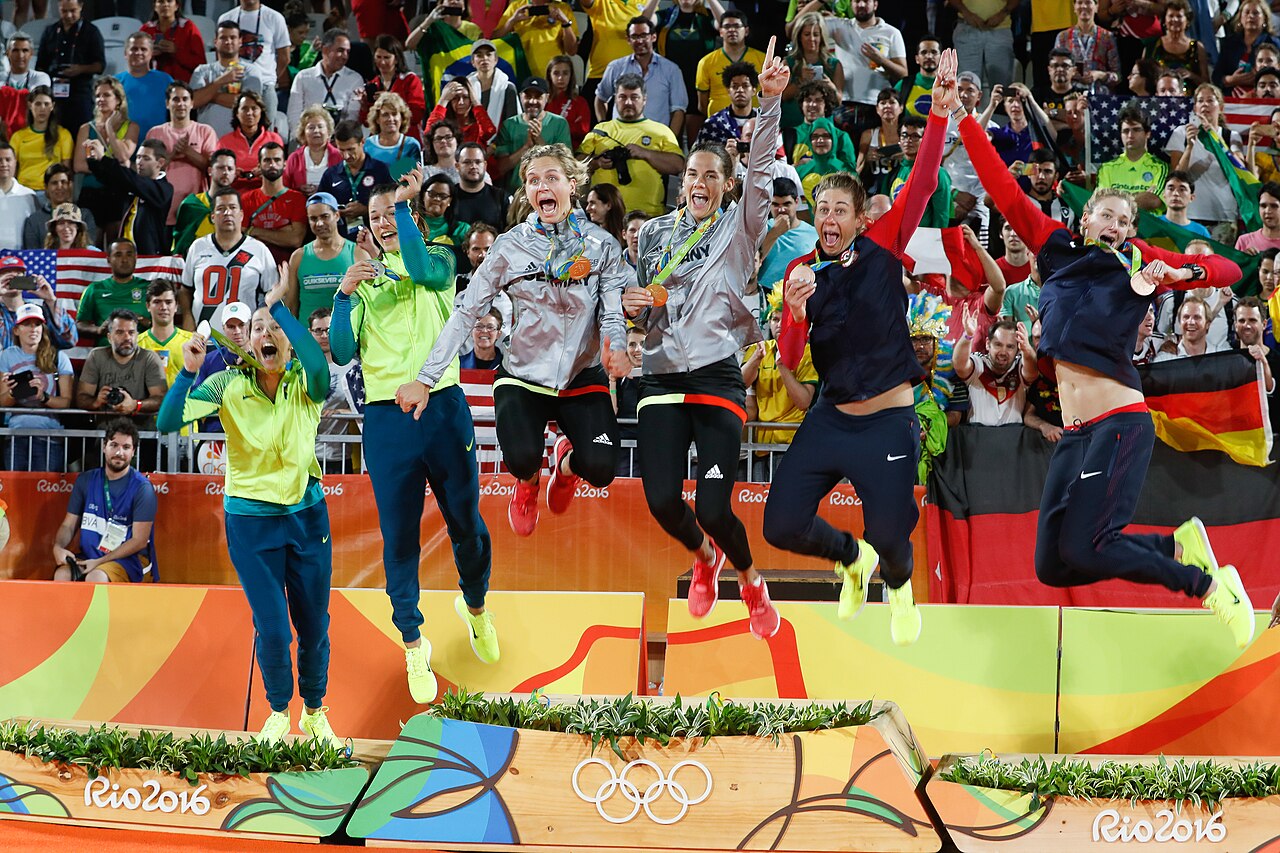
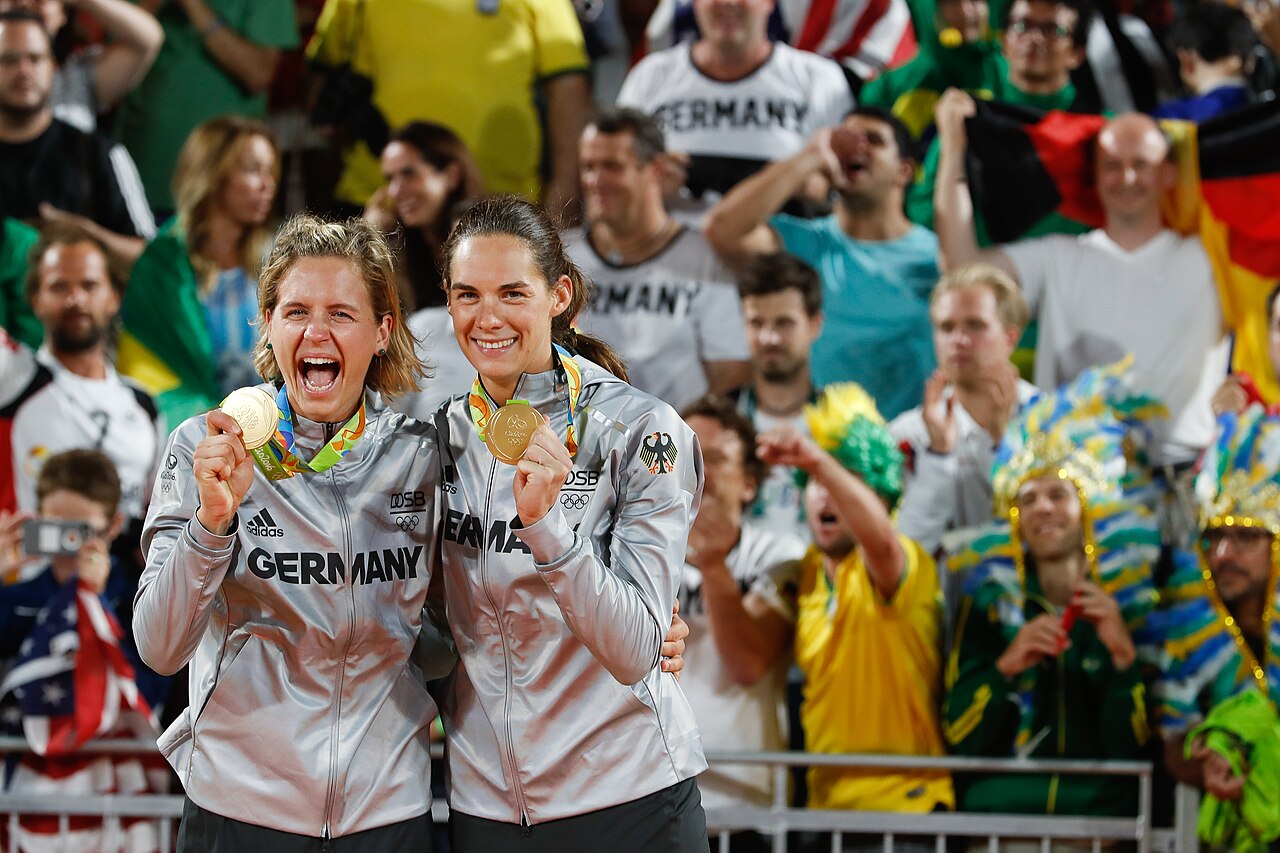
The men's beach volleyball competition at the 2016 Summer Olympics in Rio de Janeiro took place at the Copacabana Stadium. It ran from 6 to 18 August 2016, featuring 24 teams and 48 athletes. Bernard Rajzman of Brazil, an International Olympic Committee member, presented the medals, while Dr. Ary Graça Filho, President of the Fédération Internationale de Volleyball, presented the gifts.
Qualification determined the 24 teams, which were split into six pools of four. The top six teams from the FIVB Olympic ranking as of 12 June 2016 were seeded first in pools A through F. Teams ranked seventh to ninth were drawn into pools F, E, or D, and those ranked tenth to twelfth into pools C, B, or A. The thirteenth to seventeenth teams were drawn into pools A to E, with one of the remaining third-row spots filled by a continental cup champion. The next four teams went to pools F through C, and the final two spots went to the World continental cup winner and runner-up. Teams from the same national Olympic committee could not be placed in the same pool, except for the last drawing.
In the preliminary round, each group played a single round-robin. The top two teams from each group, plus the two best third-placed teams, advanced directly to the knockout stage. The other four third-placed teams entered lucky loser playoffs for the final two knockout spots. Fourth-placed teams in each pool were ranked 19th, and lucky loser playoff losers tied for 17th. The knockout stage used single elimination: round of 16 losers placed ninth, quarterfinal losers finished fifth, semifinal winners competed for gold, and semifinal losers played for bronze.
Match points were awarded as two for a win, one for a loss, and zero for a forfeit. Tie-breaking between two teams used points ratio; between three teams, head-to-head points ratio applied. Seeding positions followed pool composition rules.
The round of 16 pairings were determined by a draw. The six pool winners were separated automatically, then lucky loser playoff winners were drawn, followed by the two best third-placed teams, and finally the second-placed teams. Teams from the same preliminary pool could not meet in the round of 16.
All times were Brasília Time (UTC−03:00). The tournament included pools A through F, lucky loser playoffs, round of 16, quarterfinals, semifinals, bronze medal game, and gold medal game, with a final ran
- Event
- Men's beach volleyball tournament
- Games
- 2016 Summer Olympics
- Location
- Copacabana Stadium, Rio de Janeiro, Brazil
- Dates
- 6 to 18 August 2016
- Teams
- 24
- Athletes
- 48
- Medal presenters
- Bernard Rajzman (IOC member) and Dr. Ary Graça Filho (FIVB President)
Lore & Background
The tournament began with a preliminary round where twenty-four teams were divided into six pools of four teams, competing in a single round-robin format. The two highest-ranked teams in each group and the two best third-ranked teams advanced automatically to the knockout stage. The other four third-ranked teams entered lucky loser playoffs for the final two spots. The knockout stage followed single-elimination format, with losers in the round of sixteen ranked ninth, quarterfinal losers finishing fifth, and semifinal losers playing for bronze.
Reader's Guide
The 2016 men's beach volleyball tournament was a key event in the Rio Olympics, showcasing 48 athletes from around the world. The competition structure included pool play, lucky loser playoffs, and a knockout stage, with medals presented by IOC member Bernard Rajzman and gifts by FIVB President Dr. Ary Graça Filho. The event highlighted the global reach of beach volleyball and the organizational framework of the Fédération Internationale de Volleyball.
Did You Know?
- The tournament took place at the Copacabana Stadium in Rio de Janeiro, Brazil.
- Medals were presented by Bernard Rajzman, a Brazilian member of the International Olympic Committee.
- Gifts were presented by Dr. Ary Graça Filho, President of the Fédération Internationale de Volleyball.
- The competition ran from 6 to 18 August 2016.
The Architecture of Twelve Spots
The qualification window for the 2016 Olympic volleyball event stretched nearly ten months, opening on 22 August 2015 and closing on 22 May 2016. Twelve national teams ultimately earned berths, distributed through a layered system of pathways. The host nation received a guaranteed slot, while the 2015 FIVB World Cup produced two additional qualifiers in the form of its champion and runner-up. Five continental Olympic qualification tournaments each crowned a winner who advanced directly to Rio. The remaining four spots were contested in a two-part World Olympic Qualification Tournament. A key structural rule prevented any team that had already secured a place from entering subsequent qualification rounds, ensuring that each event genuinely determined a new participant. This tiered design meant that a single nation's Olympic journey could hinge on performance in one specific window, with no second chances once a spot was claimed elsewhere in the cycle.
Continental Showdowns Across Five Regions
Each of the five continental qualification tournaments served as a decisive contest for its region's Olympic representative. In Africa, the showdown took place at the Yaoundé Multipurpose Sports Complex in Cameroon from 12 to 16 February 2016, with the runner-up and third-place teams advancing to the World Qualification stage. Europe's qualifier was held at the Başkent Volleyball Hall in Ankara, Turkey, running from 4 to 9 January 2016 under the same second-and-third-place advancement rule. North America's NORCECA tournament was hosted at Pinnacle Bank Arena in Lincoln, Nebraska, from 7 to 9 January 2016, featuring the top four ranked teams from the 2015 NORCECA Volleyball Championship. South America's event was staged at the Bomberos Voluntarios Stadium in Bariloche, Argentina, from 6 to 10 January 2016. The Asian and Oceanian pathway was structurally unique, merging its continental qualifier with the World Olympic Qualification Tournament held in Japan, where the top-ranked among four competing teams claimed the continental berth.
The Final Gate: Two World Qualification Tournaments
The last four Olympic spots were decided through a two-tournament World Qualification series in May 2016, open only to teams that had not yet secured a place through earlier rounds. The first tournament, held at the Tokyo Metropolitan Gymnasium from 14 to 22 May 2016, was combined with the Asian Olympic Qualification Tournament. Twelve teams entered this event: Japan as host, the top three Asian-ranked teams as of 1 January 2016, and the second- and third-place finishers from the continental qualifiers. The highest-ranked Asian team claimed the continental slot, while the next three best-ranked teams overall, excluding that Asian qualifier, filled the remaining World Qualification berths. The second tournament was a compact four-team showdown at the Roberto Clemente Coliseum in San Juan, Puerto Rico, from 20 to 22 May 2016, where only the top-ranked team emerged to claim the final Olympic vacancy.
Host Nation Privilege and the World Cup Route
Brazil, as the 2016 Olympic Games host, received a reserved vacancy from the FIVB, guaranteeing its presence in the Rio tournament without needing to compete in any qualification round. This host-nation provision was a standard feature of Olympic volleyball qualification, ensuring the home country could showcase its squad before a domestic crowd. The second major direct pathway was the 2015 FIVB Volleyball World Cup, staged in Japan from 22 August to 6 September 2015. Both the tournament's champion and runner-up earned automatic Olympic berths, making this event the earliest and most prestigious qualifier in the entire cycle. Notably, the qualification process was not without complications: Egypt initially held a spot as the African qualifier winner but subsequently withdrew from the Olympic tournament. Algeria, which had finished fourth in the African qualification event, stepped in to replace them, illustrating how the system included contingency provisions to maintain the full complement of twelve competing teams.
Gallery
Frequently Asked Questions
Where and when was the men's beach volleyball tournament held at the 2016 Summer Olympics?
The competition took place at the Copacabana Stadium in Rio de Janeiro, Brazil. It ran over thirteen days, from 6 August through 18 August 2016.
How many teams and players competed in the Rio 2016 men's beach volleyball event?
A total of 24 teams, made up of 48 athletes, vied for the Olympic gold medal at Copacabana.
Who presented the medals and gifts at the men's beach volleyball ceremony in Rio 2016?
Bernard Rajzman, a Brazilian member of the International Olympic Committee, handed out the medals. Dr. Ary Graça Filho, then President of the Fédération Internationale de Volleyball, presented the official gifts.
How were the 24 teams organized for the men's beach volleyball competition at Rio 2016?
The teams were divided into six pools of four. The top six entries from the FIVB Olympic ranking as of 12 June 2016 were seeded as the first pick in pools A through F, with the remaining teams filling out the brackets.
What made the men's beach volleyball tournament at the 2016 Olympics significant for fans?
It was a full 24-team Olympic field competing on the iconic Copacabana sands, giving audiences a complete round-robin-plus-knockout format. The event showcased the best pairs in the world over a two-week window in Rio de Janeiro.
More in Beach volleyball at the Summer Olympics 1-19
Spotted an error? Know more?
This is a living reference — every entry is fact-audited, and reader corrections feed straight into our audit queue. Suggest an edit · See this site's audit record